
Why Is My AC Not Cooling? A Duncanville Homeowner’s Guide
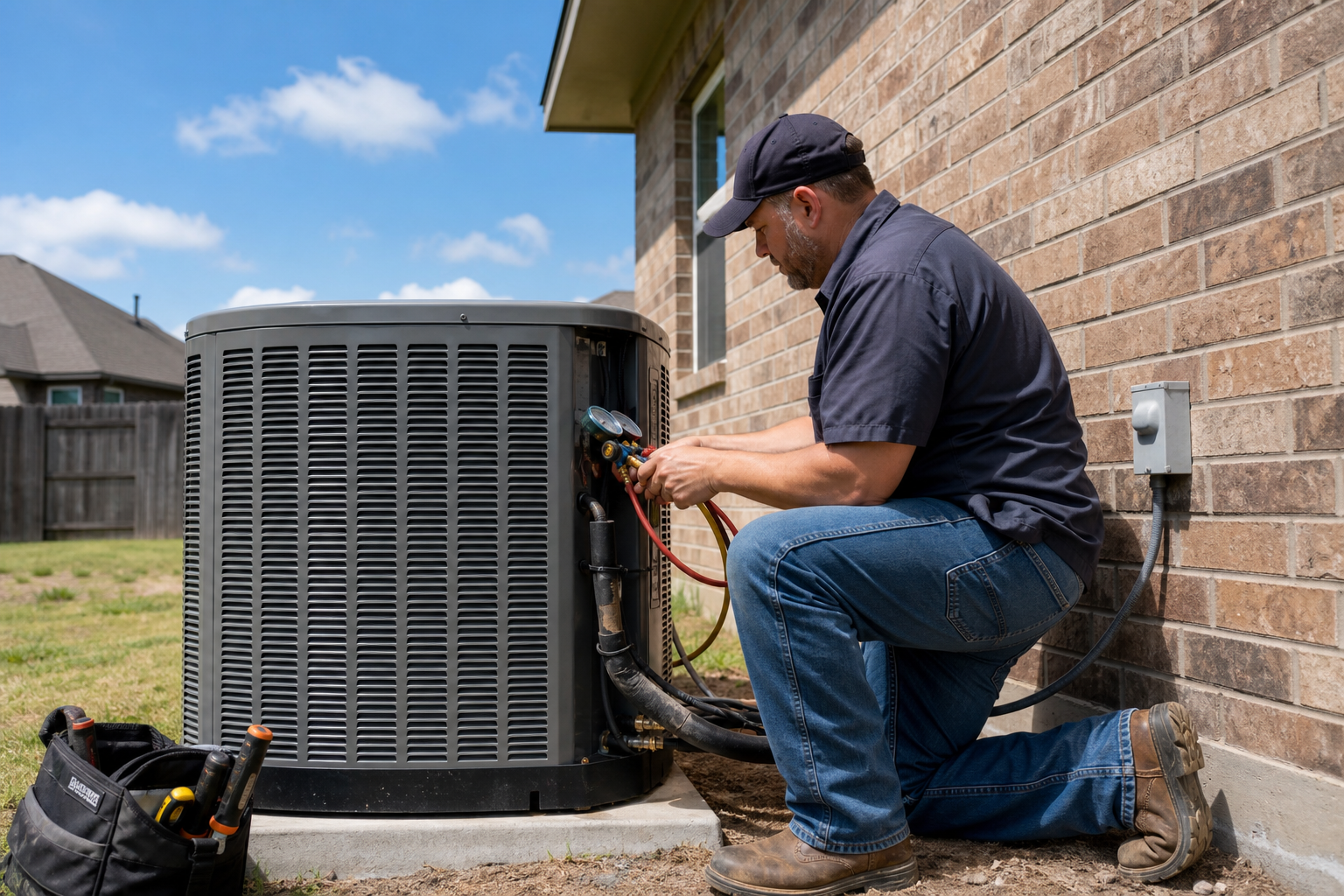
Your AC not cooling on a 100-degree Duncanville afternoon is not something you can wait out. There are several common causes, and most of them are fixable fast when you know what to look for. We have been diagnosing and repairing air conditioners across Duncanville for years, and this guide walks you through exactly what to check before you call anyone.
AC still not cooling? Call (972) 776-4663 and we will get a technician to your door fast.
Key Takeaways
- A clogged air filter is the most common reason an AC stops blowing cold air effectively.
- Incorrect thermostat settings can trick you into thinking your system has a serious problem.
- A dirty outdoor condenser coil blocks heat from escaping, causing your AC to underperform.
- Low refrigerant and frozen evaporator coils require a licensed technician to diagnose and fix safely.
- Most AC not cooling issues in Duncanville can be diagnosed and repaired in a single visit.
Your AC Stopped Cooling in a Texas Summer. Here’s What to Do.
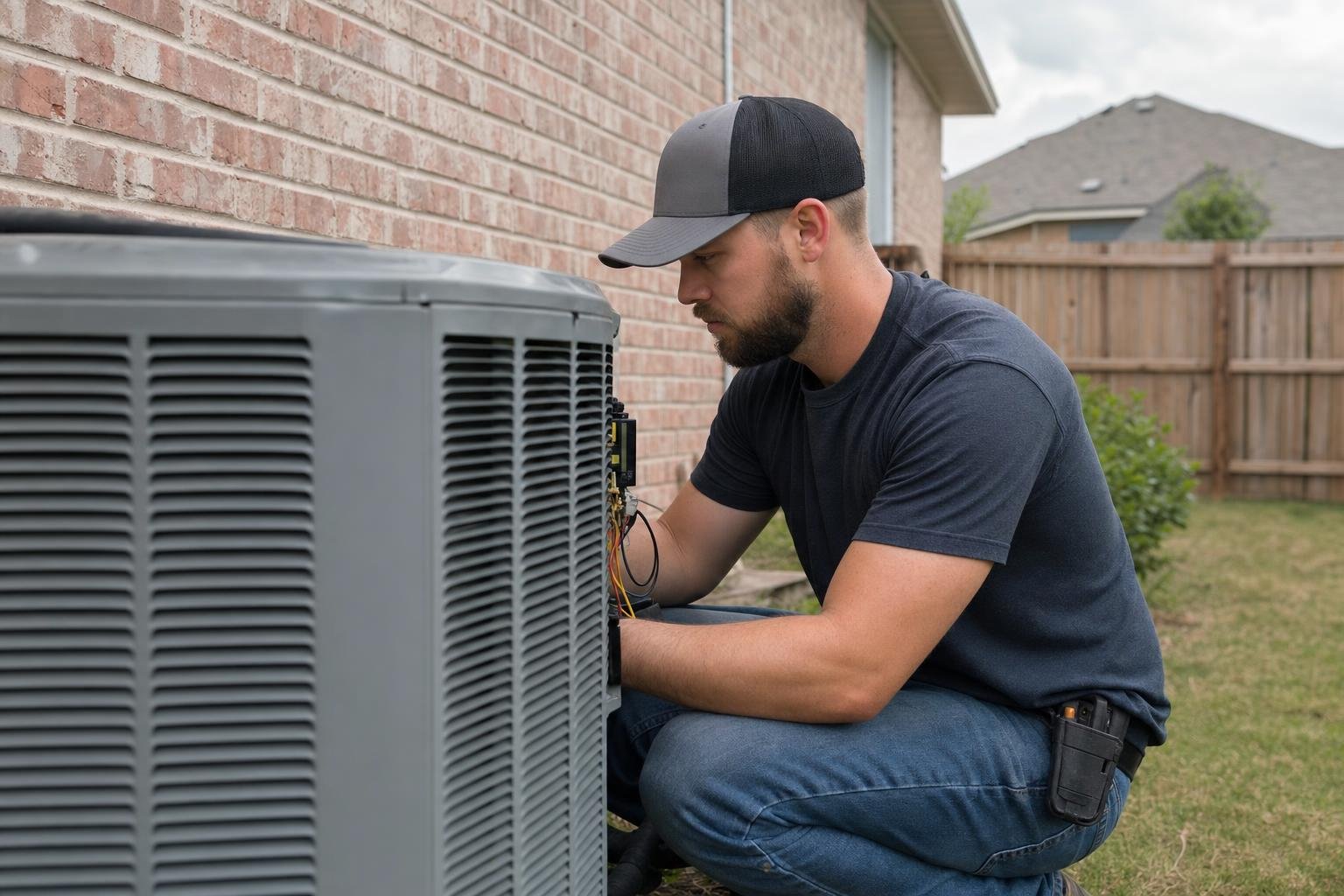
A failed air conditioner in Duncanville is not a minor inconvenience. July and August heat index readings here regularly push past 105°F. Without AC, interior temps in a single-story brick home can climb 10 degrees or more within the first hour. The clay-heavy Blackland Prairie soil under most local subdivisions absorbs heat all day and radiates it back through the night, so your house never gets a break.
This guide covers the most common reasons your air conditioner isn’t cooling your house properly. We start with the quick checks any homeowner can do right now. Then we move into mechanical causes, ductwork problems, and electrical issues that need a licensed tech.
Quick Checks Every Duncanville Homeowner Should Do First
Thermostat Settings: The First Place to Look
Your thermostat is the most common reason for an AC not blowing cold air, and it is also the easiest fix. Check two things immediately. First, confirm the system is set to COOL, not FAN ONLY. FAN ONLY mode circulates room-temperature air through your vents. It feels like airflow, but there is zero cooling happening. Second, make sure your setpoint is actually below the current room temperature. If you have a Nest, Ecobee, or Honeywell Home smart thermostat, check your schedule. Firmware updates and power outages can silently reset energy-saving schedules that bump your cooling threshold up several degrees.
Air Filter: The Most Preventable Cause of a Frozen Coil
A clogged filter is the number one preventable cause of a frozen evaporator coil. A choked filter cuts airflow across the coil. The coil surface temperature drops below the dew point. Ice forms. Once the coil freezes solid, airflow stops almost entirely and you get warm air at every vent. A 1-inch pleated filter that might last 90 days in Cedar Hill or Mansfield should be replaced every 30 to 60 days during peak summer. Pull your filter now. If you cannot see light through it, replace it before anything else.
Outdoor Unit Power: Check the Breaker Before Calling Anyone
Go to your breaker panel and find the double-pole breaker labeled for your AC condenser. A tripped breaker sits in a middle position, not fully off and not fully on. Reset it once. If it holds, your condenser may just restart normally. If it trips again immediately, stop. That signals a compressor fault or a wiring problem. That call goes to a licensed tech, not a DIY fix. You can read more about what a failed reset means on our AC repair service page.
The Most Common Mechanical Reasons Your AC Stops Cooling

Dirty Condenser Coils and Heat Transfer Loss
Your outdoor condenser unit has one job: dump heat outside your home. When the coil fins get coated in cottonwood seeds, grass clippings, or the fine clay dust that settles across Cedar Hill and DeSoto yards every summer, that heat has nowhere to go. The refrigerant stays warmer than it should. The whole system loses its ability to absorb heat indoors. Your AC runs all day and your house never gets cool. Keep 18 to 24 inches of clearance around the condenser unit. Never use a high-pressure hose on the coil fins. Those fins bend easily, and bent fins block airflow.
Low Refrigerant Always Means a Leak
Refrigerant is not a fuel your system burns. If the charge is low, there is a leak somewhere in the circuit. Three field signs point directly to this problem: ice forming on the refrigerant line or air handler, a hissing or bubbling sound near the indoor unit, and warm air at the vents despite the system running nonstop. Most leaks start at the evaporator coil. Older aluminum or copper-aluminum coil assemblies develop formicary corrosion, which eats pinhole leaks over time. In those cases, coil replacement is the correct repair, not a repeat charge. Topping off the refrigerant without fixing the leak just delays the inevitable. EPA Section 608 certification is required to handle any refrigerant type.
Compressor Failure: The Most Expensive AC Repair
The compressor is the engine of your refrigerant circuit. When it fails or starts seizing, the outdoor unit hums loudly and either trips the breaker or short-cycles off. You will feel warm air inside no matter how long the system runs. On systems 10 or more years old, replacing the compressor alone rarely makes financial sense. A full condenser replacement typically costs less over five years than swapping the compressor alone.
Got an AC running but not cooling? Our technicians serve Grand Prairie, Cedar Hill, DeSoto, and the surrounding area. Call us at (972) 776-4663 to schedule a diagnostic visit today.
How Ductwork and Airflow Problems Quietly Kill Cooling Performance
Leaky Flex Duct Connections in Attic Spaces
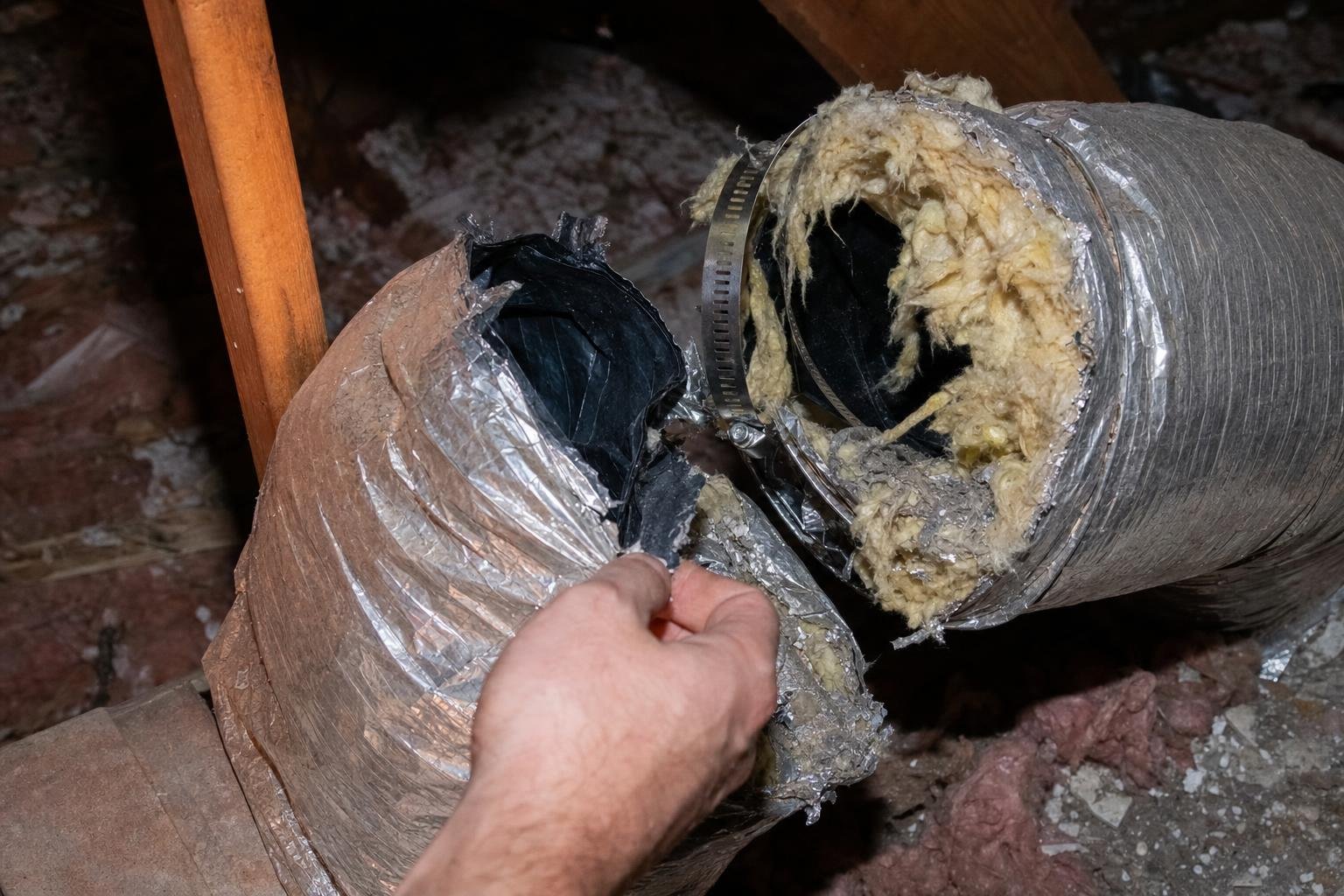
Many homes in Cedar Hill, Midlothian, and the surrounding area were built between 1975 and 1995. Flex duct was the standard installation, and it was often secured with minimal mastic at the joints. Decades of thermal cycling cause those joints to separate. Attic temperatures in a Texas July regularly hit 140 to 150 degrees Fahrenheit. Separated joints can dump 20 to 30 percent of your conditioned air straight into the attic before it ever reaches a vent.
A duct inspection and cleaning can confirm the problem. For precise measurement, a duct blaster test quantifies leakage as an actual number, so you know exactly what you are dealing with before committing to sealing or full duct replacement.
Blocked Returns and Closed Vents Make Things Worse
Closing supply registers in rooms you do not use sounds like a smart idea. It is not. It pressurizes the duct system and forces air through existing leaks faster. Poor attic insulation adds to this by increasing the heat load every cycle, forcing your system to work harder against a problem it cannot overcome on its own.
- Keep return grilles clear of furniture and drapes
- Leave interior doors open to allow air to circulate back to the handler
- Never close more than one or two supply registers at a time
When an Electrical Problem Is the Real Reason Your AC Won’t Cool
Sometimes why your AC is not working has nothing to do with refrigerant or coils. The fault is in the electrical system, either at the unit itself or back at the panel. This comes up more than most homeowners expect, especially in older homes in Mansfield and Midlothian where the original wiring and electrical panels were sized for appliances from decades ago, not modern high-efficiency condensers pulling 20 to 30 amps on startup.
Capacitor Failures and Breakers That Keep Tripping
The run capacitor is one of the most frequently replaced parts in any residential AC system. When it fails, the condenser fan slows down or stops completely. The compressor hums, struggles to start, then cuts off. A breaker that keeps tripping is a different problem. Resetting it once is fine. Resetting it twice without knowing why is where things get dangerous. A tripping breaker is reacting to a real fault downstream. When it keeps going off, the correct call is breaker replacement or a full circuit diagnosis from a licensed electrician.
When the Problem Crosses Into Licensed Electrician Territory
If you open the disconnect box near the condenser and smell burning insulation, or you see discoloration on the terminals or melted wire insulation anywhere in the circuit, that is no longer an HVAC call alone. These are fire risk indicators that require electrical troubleshooting and inspection before the system runs again. If you have run through these checks and your AC is still not cooling, call our team at (972) 776-4663. Dwello Home Services serves Mansfield, Midlothian, Plano, McKinney, Allen, Lewisville, The Colony, Flower Mound, Denton, and the surrounding Dallas area.
Frequently Asked Questions
How Long Does an AC Repair Typically Take in Duncanville?
Most standard repairs, such as capacitor replacements or refrigerant recharges, take one to three hours once a technician arrives on site. More involved jobs like coil cleaning or ductwork repairs may run three to five hours depending on accessibility.
Is It Safe to Run My AC If It Is Blowing Warm Air?
Running a system that is not cooling properly for a short time is generally safe, but continuing to operate it for hours can stress the compressor and cause secondary damage. If the unit is short cycling, making grinding noises, or icing over, shut it off and call a technician promptly.
What Does an AC Diagnostic Visit Cost in Duncanville?
Diagnostic fees in the Duncanville area typically range from $75 to $150, though some companies waive the fee if you proceed with the repair. Dwello Home Services applies transparent, flat rate pricing so the diagnostic cost is clearly communicated before any work starts.
Can My AC Stop Cooling Because of High Outdoor Humidity?
Extreme humidity places added load on the system, making it work harder to remove moisture from indoor air, which can reduce perceived cooling even when the equipment is functioning correctly. If your home feels clammy but the thermostat reads the set temperature, the problem may be latent heat load rather than a mechanical failure.
How Often Should I Schedule Preventive AC Maintenance to Avoid Cooling Problems?
Most HVAC manufacturers recommend a professional tune up once per year, ideally in early spring before Duncanville temperatures climb into the nineties. Annual maintenance typically includes coil cleaning, refrigerant level verification, electrical connection checks, and blower inspection.
Will a New Thermostat Fix My AC If It Is Not Cooling Properly?
A faulty thermostat can absolutely cause cooling problems, including incorrect temperature readings, failure to signal the system to run, or short cycling. However, replacing the thermostat only solves the problem when the thermostat is actually the source, so it is worth having a technician confirm the diagnosis first.
Does Homeowners Insurance Cover AC Repairs When the System Stops Cooling?
Standard homeowners insurance policies generally do not cover AC repairs caused by normal wear and tear, lack of maintenance, or component failure. Coverage may apply if the damage resulted from a covered peril such as a lightning strike or a fallen tree.
Ready to Get Started with Dwello Home Services?
Call (972) 776-4663 to speak with our team directly. We’re ready to answer your questions, walk you through your options, and help you find the right solution for your needs. Whether you’re just starting to plan or ready to move forward, we’ll make the process simple and stress-free. Reach out today and let’s talk about how we can help.