
8 Signs Your Water Heater Is Near the End of Its Lifespan
Last Updated: November 21, 2026
Quick Summary
The average water heater lifespan is 8 to 12 years for a conventional tank unit and 15 to 20 years or more for a tankless system, assuming correct installation and regular maintenance. Your actual water heater lifespan depends on the unit type, your water chemistry, and daily hot-water demand.
- Tank water heaters last 8 to 12 years; tankless units often reach 15 to 20 years with regular descaling.
- On well water, expect the shorter end of the range, often 6 to 10 years for a tank unit.
- Flush the tank annually, or every six months in hard-water areas, to clear sediment.
- Replace the anode rod once more than half is gone or the core wire is exposed.
- A leaking tank cannot be patched reliably, so replace it immediately rather than repair.
Table of Contents
- How Long a Residential Water Heater Actually Lasts
- Lifespan of Electric Water Heater Units and What Shortens It
- Gas Water Heater Lifespan: Sediment, Venting, and Hard Water
- How Long Does a Hot Water Heater Last on Well Water?
- Water Heater Repair or Replacement: A Decision Matrix
- Maintenance Schedule That Extends Service Life
- Warranty Versus Expected Lifespan: What the Fine Print Tells You
- Book a Water Heater Inspection Before It Fails
- Frequently Asked Questions
How Long a Residential Water Heater Actually Lasts
The average lifespan of a residential water heater is 8 to 12 years for a conventional tank unit and 15 to 20 years or more for a tankless system, assuming it was installed correctly and maintained along the way. That range is a starting point, not a promise. The water heater lifespan you actually get depends on the type of unit, the water running through it, and how much hot water your household demands every day.
Lifespan by Type: Tank, Tankless, Gas, and Electric
Tank water heaters generally last 8 to 12 years. Tankless water heaters often reach 15 to 20 years, and sometimes more than 20 with regular descaling. Gas and electric tank models land in similar territory, though the failure modes differ: gas units deal with sediment and venting, electric units with heating elements and hard water.
| Water Heater Type | Typical Service Life | What Shortens It |
|---|---|---|
| Gas tank | 8-12 years | Sediment buildup, poor venting, hard water |
| Electric tank | 8-12 years | Sediment, element failure, hard water |
| Tankless gas | 15-20 years | Scale buildup without descaling |
| Tankless electric | 15-20 years | Scale, undersized electrical supply |
Typical Service Life
Lifespan of Electric Water Heater Units and What Shortens It
The lifespan of electric water heater units usually falls between 8 and 12 years, and the biggest killer is sediment. Minerals settle on the bottom of the storage tank and bake onto the lower heating element. That element then works harder, overheats, and fails early. A burned-out element is cheap to replace; a rusted-through tank bottom is not.
Hard water speeds this up. So does high household demand: a unit that runs near constantly wears faster than one that cycles a few times a day. If your electric heater is past year eight and you are calling for repairs twice a year, put that money toward replacement instead.
Gas Water Heater Lifespan: Sediment, Venting, and Hard Water
Gas water heater lifespan runs 8 to 12 years under normal conditions, and venting problems can cut that short. A corroded flue or blocked vent forces the burner to run inefficiently and creates a genuine safety concern, not just a performance one. Sediment plays the same role it does in electric tanks, insulating the bottom of the tank from the burner so the steel overheats and corrodes from the inside.
Hard water leaves scale on the tank and in the pipes, and it shortens the life of every fixture downstream. If scale is the recurring problem in your home, water filtration services in Duncanville, TX address the root cause instead of just replacing parts.
How Long Does a Hot Water Heater Last on Well Water?
How long does a hot water heater last on well water? Expect the shorter end of the range, often 6 to 10 years for a tank unit. Well water tends to carry more dissolved minerals and sediment than treated municipal supply, and that material settles in the tank faster. A whole-home sediment filter ahead of the heater makes a measurable difference, and so does flushing the tank more often than the standard once-a-year schedule.
Have the water tested. Knowing whether you are fighting hardness, iron, or grit tells you which maintenance actually pays off.
Water Heater Repair or Replacement: A Decision Matrix
Repair or replace is the decision most homeowners actually face, and the honest answer depends on age, repair cost, leak risk, efficiency, and how long you plan to stay in the home. The matrix below adds cost ranges and a simple framework so you can compare a repair quote against a replacement quote instead of guessing.
Typical cost ranges
| Item | Typical Cost Range |
|---|---|
| Common tank repair (element, thermostat, T&P valve) | $150-$400 |
| Anode rod replacement | $200-$400 |
| Tankless descaling service | $150-$300 |
| Conventional tank replacement (unit and labor) | $1,000-$2,500 |
| Tankless replacement (unit and labor) | $2,500-$5,000+ |
Decision matrix
| Situation | Recommendation |
|---|---|
| Under 8 years old, one repair under a few hundred dollars | Repair |
| 8-12 years old, first major repair | Repair, but start budgeting for replacement |
| Over 10 years old, second repair in two years | Replace |
| Leaking from the tank itself | Replace immediately |
| Rust-colored hot water, no other cause | Replace soon |
| Repair quote above half the replacement cost | Lean toward replacement |
| Unit is undersized for the household | Replace with a correctly sized unit |
The framework behind the matrix
Age against expected life. A tank at year ten of an 8- to 12-year life is near the end of its design window. A repair buys time, but the next failure is likely close behind.
Repair cost against replacement cost. Get both quotes in writing and compare them directly.
Leak risk. A leak at a fitting or valve can often be repaired.
Efficiency. Older tanks lose efficiency as sediment builds and standards tighten.
Household needs. If the current unit is undersized, a replacement is the moment to correct sizing rather than repair a unit that will keep running short.
A leaking tank cannot be patched reliably. If you are weighing options, our water heater services in Duncanville, TX cover both repair and full replacement so you can get a straight answer on which makes sense for your unit.
Maintenance Schedule That Extends Service Life
Maintenance is the single biggest lever a homeowner controls over water heater lifespan, and the difference between a unit that quits at year eight and one that reaches year twelve is usually a few hours of routine work per year. The schedule below is organized by task, frequency, and what each task actually protects. It applies to conventional tank units; tankless systems follow a separate descaling rhythm covered at the end.
Annual tasks
Flush the tank. Connect a garden hose to the drain valve at the bottom of the tank, run it to a floor drain or outside, and let the tank drain until the water runs clear.
Test the temperature and pressure relief (T&P) valve. Lift the lever and let it snap back. You should hear water discharge and then stop. A valve that sticks, weeps, or will not reseat is a safety issue, not a maintenance nuisance, and should be replaced by a technician.
Inspect the venting on gas units. Check that the flue is clear and the draft hood is seated. A blocked or corroded flue forces the burner to run inefficiently and can allow combustion gases into the home.
Check for leaks and corrosion at fittings. Look at the inlet and outlet connections, the drain valve, and the base of the tank. Rust streaks or mineral crust at a fitting usually mean a slow leak that will worsen.
Every two to three years
Inspect the anode rod. The anode rod is a sacrificial metal rod that corrodes in place of the tank lining. Once it is consumed, the steel tank begins to corrode. Pull the rod and look at it: if more than half is gone or the core wire is exposed, replace it. On many tanks the rod is under the top cover; on some models it is combined with the hot-water outlet, which makes replacement a technician job.
Descale tankless units. Tankless heaters do not store water, but scale still coats the heat exchanger and reduces flow and efficiency. Flush with a manufacturer-approved descaler per the model’s instructions, typically once a year in hard water and every 18 to 24 months in soft water. Skipping descaling is the most common reason a tankless unit fails well short of its 15- to 20-year potential.
Every five to six years
Replace the T&P valve and inspect the dip tube. These parts are inexpensive and fail quietly.
Have a professional service the unit. A technician can check the burner assembly on gas units, test the elements on electric units, verify the anode rod condition, and confirm the venting and relief valve are working.
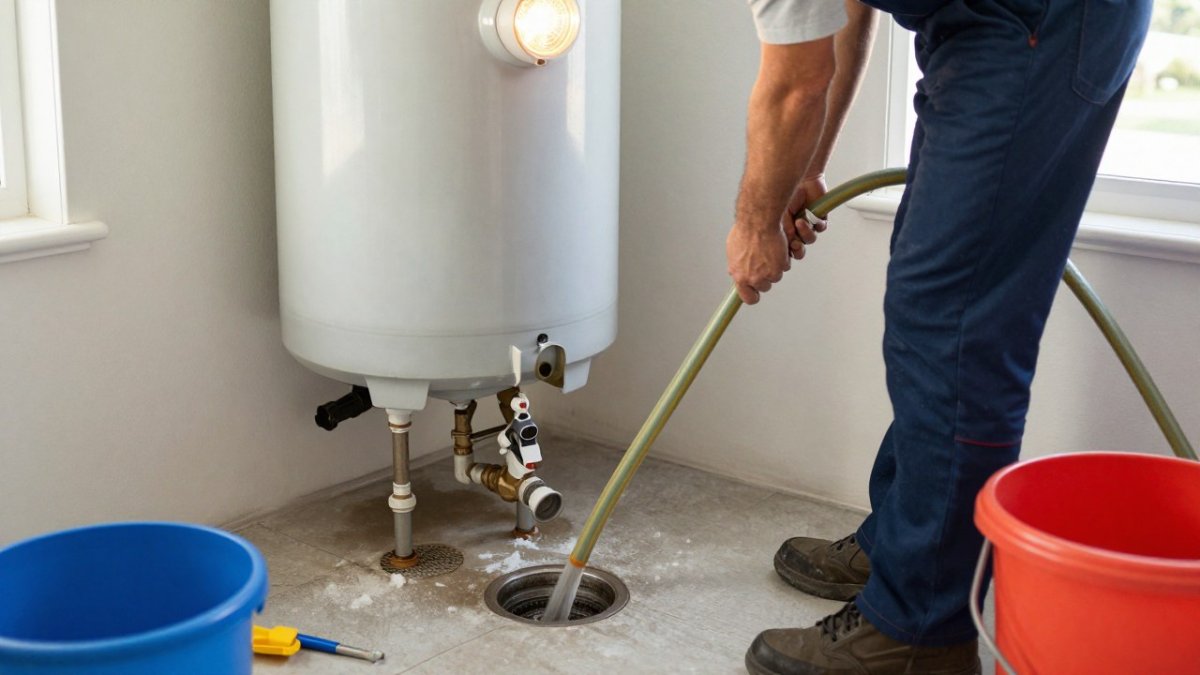
Watch out: never open the T&P valve or drain a tank while the water is hot and the power or gas is still on. Let the tank cool, shut off the fuel or breaker, and close the cold-water inlet before draining.
A professional tune-up handles the parts most homeowners skip, including the anode rod and the relief valve. Our $99 tanked water heater tune-up covers that annual service for North Texas homes.
Warranty Versus Expected Lifespan: What the Fine Print Tells You
A tank warranty often runs 6 to 12 years, but read what it actually covers. Most tank warranties prorate after the first few years and cover the tank only, not labor. The parts warranty on a tankless unit may run longer than the heat exchanger’s realistic service life, or shorter. The number on the box is a manufacturer’s ceiling, not a prediction. Real-world life expectancy depends on installation quality, water chemistry, and maintenance, and none of those are the manufacturer’s responsibility.
Book a Water Heater Inspection Before It Fails
An inspection tells you where your unit stands before it quits on a cold morning. A technician checks the anode rod, flushes sediment, tests the relief valve, and confirms the venting is clear. That is a small cost against an emergency replacement.
Dwello Home Services is family-owned, fully licensed, and available around the clock for plumbing and water heater calls across the Dallas-Fort Worth area. Whether you need a routine inspection or a full replacement, our team handles plumbing services in Duncanville, TX and plumbing work in Midlothian, TX so you can book the visit that fits your schedule.
A water heater rarely fails without warning. Rusty water, popping sounds, and rising energy bills are the signs, and an inspection catches them while repair is still an option. Dwello Home Services offers licensed technicians, 24/7 emergency availability, and honest recommendations on repair versus replacement. Get started with Dwello Home Services and keep hot water flowing without a surprise breakdown.
Frequently Asked Questions
What is the average lifespan of a residential water heater?
A conventional tank water heater lasts about 8 to 12 years, while a tankless unit typically runs 15 to 20 years or more with proper maintenance. Gas and electric tanks land in roughly the same range, though hard water and heavy household demand push units toward the shorter end. If your tank is past 10 years old and showing rust, rumbling, or leaks, start planning a replacement rather than waiting for a full tank failure.
How long does a gas water heater last compared with an electric one?
Gas water heater lifespan usually falls between 8 and 12 years, similar to electric tanks. Gas units face extra wear from sediment baking onto the burner plate and from venting problems, while electric units tend to fail at the heating elements or tank seams. In both cases, annual flushing and a healthy anode rod are the biggest factors in reaching the top of that range.
Does well water shorten a water heater’s lifespan?
Yes. Well water often carries higher levels of minerals, iron, and sediment than treated municipal water, which speeds up sediment buildup at the bottom of the tank. That layer insulates the water from the burner, causes overheating and rumbling, and can cut service life by several years. Homes on well water should flush the tank every six to twelve months and check the anode rod annually.
Should I repair or replace an aging water heater?
Use a simple rule: if the unit is more than 10 years old and needs a costly repair, replace it. The same applies if the tank itself is leaking, since a leaking tank cannot be repaired. For a younger unit with a failed element, thermostat, or valve, repair usually makes sense and buys you years of service.