
How to Prevent Electrical Fires from Overloaded Circuits
Last Updated: October 28, 2026
Quick Summary
Preventing electrical fires from overloaded circuits means keeping the current draw within the circuit’s rating and never defeating the breaker that protects it. Add up the wattage of devices on a circuit, respect the 80% continuous load limit, avoid daisy-chaining power strips, and treat burning smells, sparks, or repeated trips as urgent warnings.
- A 15-amp circuit at 120V handles 1,800 watts, with a safe continuous load of 1,440 watts.
- Never daisy-chain power strips or plug space heaters into them; use a wall outlet instead.
- A surge protector guards against voltage spikes but does not stop an overload.
- Reset a tripped breaker only once after unplugging devices; if it trips again, call an electrician.
- Never replace a tripped breaker with one of higher amperage, which pushes the overload onto the wiring.
Table of Contents
- What an Overloaded Circuit Is and Why It Starts Fires
- Signs of an Overloaded Circuit You Should Never Ignore
- How Many Appliances Can Be on One Circuit? A Load Calculation Method
- Power Strip Safety: Ratings, Daisy-Chaining, and Hidden Fire Hazards
- Why Does My Circuit Breaker Keep Tripping? Troubleshooting Boundaries
- Room-by-Room Prevention Checklist for Older Homes
- When to Call a Licensed Electrician for an Overloaded Circuit
- Frequently Asked Questions
What an Overloaded Circuit Is and Why It Starts Fires
Overloaded circuits carry more electrical current than their wiring and breaker are rated to handle.
Most homes have a built-in guard: the circuit breaker. Push too much demand through a circuit and the breaker trips to cut power.
Circuit overload is a leading driver of residential electrical fires. The U.S. Fire Administration’s electrical fire data points to electrical failures as a major cause of home fires each year, and overloaded wiring is a common thread.
The core problem is simple. Your wiring has a limit. Exceed it, and heat builds where you cannot see it.
Signs of an Overloaded Circuit You Should Never Ignore
Watch for these warning signs of an overloaded circuit, and treat each one as an urgent message from your electrical system:
- Burning smell near outlets or the panel, with no obvious source
- Hot outlet or switch plate that feels warm to the touch
- Discolored or scorched outlet covers and plugs
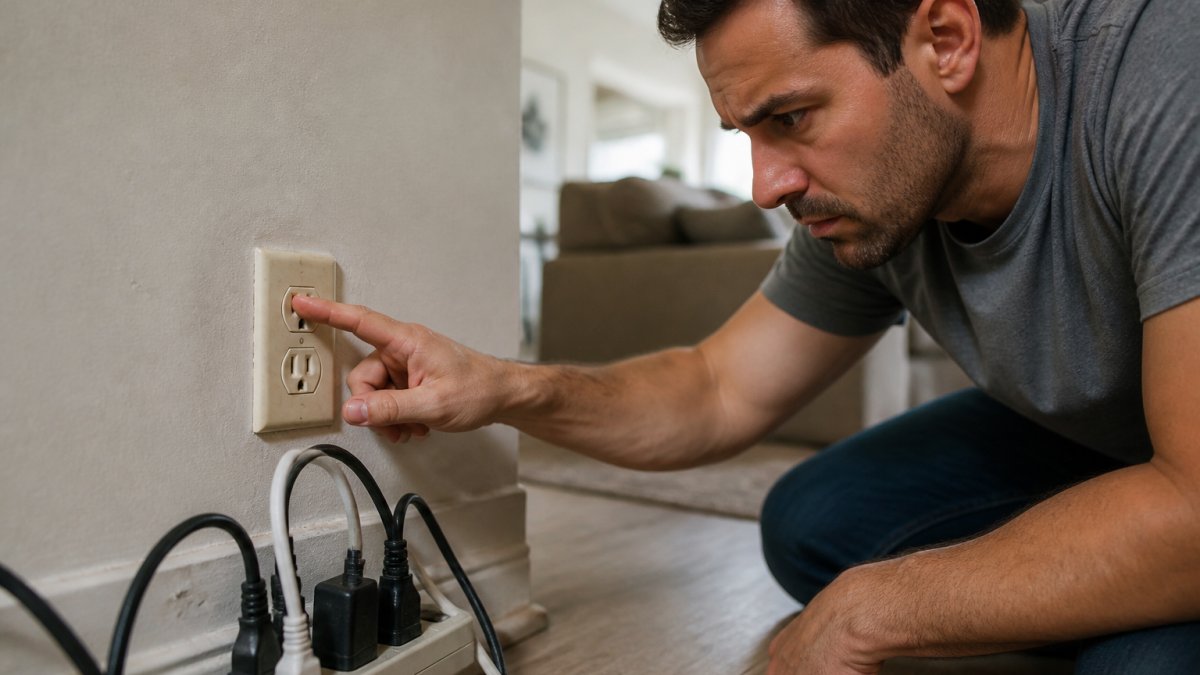
Any one of these can be a warning sign. A burning smell or visible sparks means act now: cut power at the panel if you can do so safely, and call for help.
What to Do Immediately When You Notice a Warning Sign
The right response depends on the sign. Use this sequence, and stop at the first step that applies.
If you smell burning or see smoke:
- Do not touch the outlet or switch.
- If you can reach the electrical panel safely and without passing through smoke, switch off the main breaker.
- Leave the area and call 911 from outside or from a safe location. Smoke or a burning smell with no obvious source can indicate a fire inside the wall.
- Do not re-enter until firefighters say it is safe.
If an outlet or switch plate is hot, discolored, or scorched:
- Stop using that outlet immediately.
- Unplug devices only if the plug is cool and you can do so without touching a hot surface.
- Turn off the circuit at the panel if you can identify it.
- Call a licensed electrician before using that circuit again. Heat damage inside the box often extends beyond what you can see.
If you see sparks or a flash when plugging something in:
- Unplug the device and stop using that outlet.
- Inspect the plug and cord for damage; discard the device if the cord is frayed or the plug is scorched.
- Have an electrician check the outlet before it is used again.
If a breaker trips repeatedly:
- Unplug the devices on that circuit.
- Reset the breaker once.
- If it trips again with nothing plugged in, leave it off and call an electrician. A breaker that trips with no load can indicate a wiring fault.
Never reset a breaker that trips immediately after being reset, and never replace a tripped breaker with one of a higher amperage. Both practices defeat the safety device and push the overload onto the wiring.
Why These Signs Matter More Than They Seem
A warm outlet or a faint burning smell is easy to dismiss, but each can be a warning sign. Insulation inside a wall can smolder for hours before flames appear. If you notice these signs, cut power and call for help.
Treat any burning smell, smoke, sparking, or scorched outlet as an emergency. Cut power at the panel only if you can do so safely, leave the area, and call 911. For hot outlets, buzzing, or repeated trips without smoke, stop using the circuit and call a licensed electrician.
How Many Appliances Can Be on One Circuit? A Load Calculation Method
There is no single number. The answer depends on the circuit’s rating and the wattage of what you plug in. But you can calculate it yourself in a few steps.
Step 1: Find the circuit’s capacity.
Step 2: Add up the wattage of every device on that circuit. Check the label or manual for the number.
| Circuit Rating | Max Watts (120V) | Safe Continuous Load (80%) |
|---|---|---|
| 15 amps | 1,800 W | 1,440 W |
| 20 amps | 2,400 W | 1,920 W |
| 30 amps | 3,600 W | 2,880 W |
High-wattage appliances like space heaters, microwaves, and hair dryers can use a substantial share of a circuit. If your panel cannot support the load you need, that is a job for electrical panel services in Duncanville, TX to sort out safely.
Power Strip Safety: Ratings, Daisy-Chaining, and Hidden Fire Hazards
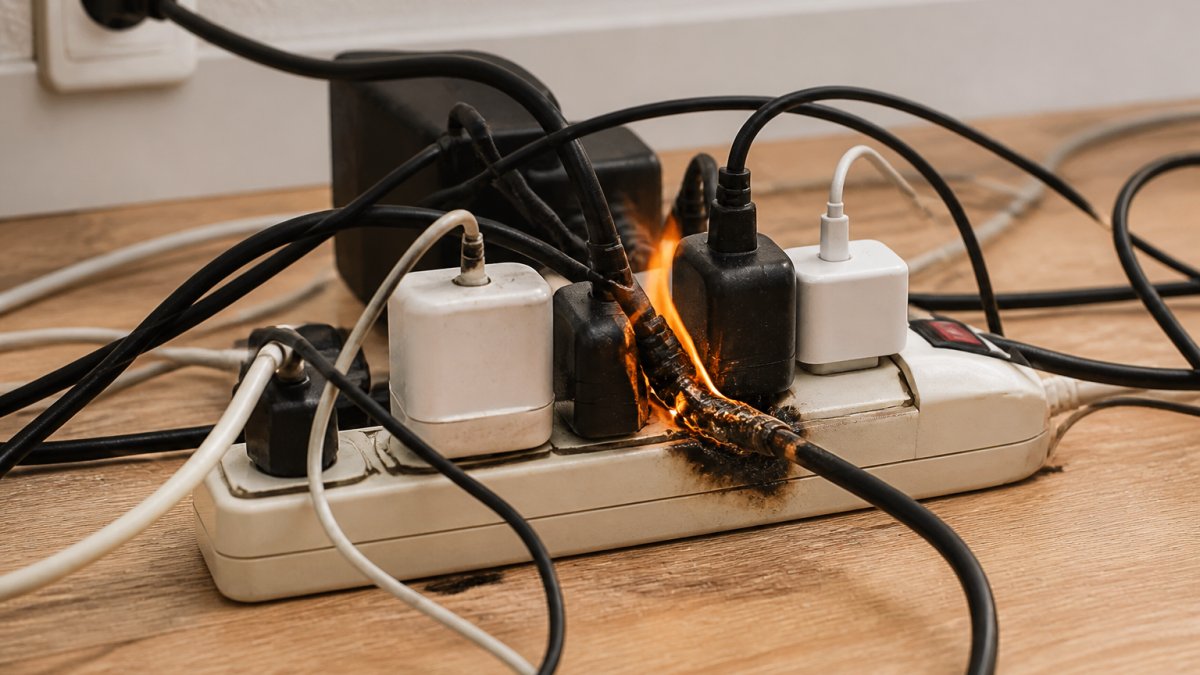
A power strip does not add capacity to a circuit. Plugging in more devices than the circuit can support can contribute to an overload.
Three rules matter most:
- Never daisy-chain. Plugging one power strip into another multiplies the load on a single outlet with no added protection.
- Respect the rating. Every strip lists a maximum amperage or wattage. Do not exceed it.
- Skip high-wattage devices. Space heaters and similar appliances should go straight into a wall outlet, never a strip.
A surge protector guards against voltage spikes. It does not stop an overload. Cords under rugs or furniture are another hidden hazard: they trap heat and wear down insulation until frayed wiring turns into a fire risk.
Why Does My Circuit Breaker Keep Tripping? Troubleshooting Boundaries
A breaker that trips once is doing its job. A breaker that trips repeatedly is telling you something is wrong, and there is a line between what you should handle and what you should not. If the breaker itself is the problem, you can book circuit breaker replacement in Duncanville, TX.
Why a Breaker Trips
A circuit breaker is a switch that opens when current exceeds its rating. Inside the breaker, a bimetallic strip bends as it heats up, or a magnetic element responds to a sudden surge. Either mechanism trips the breaker and cuts power before the wiring overheats. That is the entire purpose: the breaker is the weakest link by design, so it fails safely instead of letting the wiring fail dangerously.
A breaker can trip for three broad reasons:
- Overload: too many devices drawing current on one circuit for too long. This is the most common cause and the one most homeowners can address.
- Short circuit: a hot wire touches a neutral or ground wire, causing a sudden, large current draw. This usually trips the breaker instantly and often produces a spark or a pop.
- Ground fault: current leaks from the hot wire to the grounding path, often through moisture or damaged insulation. Ground-fault circuit interrupter (GFCI) breakers and outlets are designed to catch this and trip at very low current levels.
Why Repeatedly Resetting a Breaker Is Unsafe
Resetting a breaker restores power, but it does not fix the condition that caused the trip. If the underlying problem is a short circuit, a ground fault, or damaged wiring, each reset sends current back through a fault.
A breaker that trips more and more often over weeks or months warrants attention. Repeatedly resetting it does not address the cause.
Never replace a tripped breaker with one of a higher amperage to stop the trips. The breaker is sized to protect the wiring. A larger breaker lets more current flow through wires that were never rated for it, which is a direct fire risk.
What You Can Safely Check Yourself
Some troubleshooting is reasonable for a homeowner. Stay within these boundaries:
-
Unplug devices one at a time to see whether the breaker continues to trip. If it does, stop troubleshooting and seek qualified help.
-
If you have reduced the load, reset the breaker once. If it trips again, leave it off and seek qualified help.
-
Inspect cords and plugs on the circuit for fraying, scorch marks, or a loose fit. Replace damaged cords rather than repairing them with tape.
What to Leave to a Qualified Electrician
Stop troubleshooting and call a licensed electrician when any of the following apply:
- The breaker trips again immediately after being reset, especially with nothing plugged in.
- You smell burning, see smoke, or find scorch marks near an outlet or the panel.
- The panel feels warm to the touch, buzzes, or shows rust or signs of moisture.
Panel work carries real risk. The main lugs in a service panel remain energized even when the main breaker is off, and arc flashes can occur without warning. An electrician has the training, tools, and protective equipment to diagnose the circuit safely and to determine whether the fix is a new breaker, a new circuit, or a panel upgrade.
A breaker that trips once is normal. A breaker that trips repeatedly is a signal to reduce the load and investigate. Reset it once after unplugging devices; if it trips again, leave it off and call a licensed electrician. Never upsize a breaker to stop trips.
Room-by-Room Prevention Checklist for Older Homes
Older homes were wired for a different era, with fewer outlets and lower demand. If your house predates modern electronics, use this checklist:
- Kitchen: keep the microwave and toaster on separate circuits
- Living room: no space heater on a power strip
- Bedrooms: one heat-producing device per outlet
- Bathroom: keep hair dryers off extension cords
Fewer outlets push people toward strips and extension cords. Adding safe outlets reduces that temptation. For older wiring, electrical outlet installation services in Duncanville, TX can add capacity where you actually need it.
When to Call a Licensed Electrician for an Overloaded Circuit
Call a licensed electrician when warning signs persist, when a breaker will not stay reset, or when your panel cannot handle your household’s demand. Some problems are beyond DIY.
Here is when to stop troubleshooting and bring in help:
- Repeated tripping on the same circuit after you have reduced the load
- Any burning smell, smoke, or scorch marks
- A panel that is warm, buzzing, or outdated
- Plans to add large appliances or an EV charger
For persistent issues, electrical troubleshooting services in Duncanville, TX diagnose the problem before it becomes a fire. When you are ready to book a licensed pro, our full electrical services in Duncanville, TX cover repairs, panels, and upgrades.
Frequently Asked Questions
How can you tell if a circuit is overloaded?
Warning signs can include outlets or switch plates that feel hot to the touch, a burning smell near outlets, flickering lights when appliances turn on, and breakers that trip repeatedly. You might also notice discolored outlet covers or cords that feel warm. If any of these appear, stop using the circuit and have a licensed electrician inspect it.
Is it safe to plug a power strip into another power strip?
No. Daisy-chaining power strips can contribute to an overload and create a fire hazard. Follow the power strip’s rating and do not exceed it.
What should you do if a breaker keeps tripping?
First, unplug appliances on that circuit and reset the breaker once. If it trips again with nothing plugged in, stop resetting it and call a licensed electrician. Repeated tripping can have different causes and should be checked by a qualified electrician. Do not replace the breaker with a larger size to stop tripping.
How many appliances can be on one circuit?
It depends on the circuit’s amperage and the wattage of each appliance. Add up the wattage of all devices on the circuit, and consult a qualified electrician if you are unsure about the circuit’s capacity.
Electrical fires from overloaded circuits are preventable, but only if you act on the warning signs instead of resetting the breaker and moving on. At Dwello Home Services, our licensed technicians handle electrical repairs, panel upgrades, dedicated circuits, and outlet installation with clear communication and no hidden fees. Get started with Dwello Home Services and make your home’s electrical system safe for the way your family actually lives.