
High SEER2 AC Units: What the Upgrade Really Saves You
Last Updated: November 19, 2026
Quick Summary
High seer2 ac units cut electricity use per unit of cooling, so savings scale with your runtime and electricity rate. Most homes see a payback period of roughly five to twelve years, and the upgrade pays off fastest in hot climates with long cooling seasons and high rates.
- For most hot-climate homes, 15 to 16 SEER2 is a solid baseline and 18 or higher is a genuine efficiency upgrade.
- SEER2 uses tougher test conditions than SEER, so the same machine gets a lower number under SEER2.
- Estimate annual savings by dividing capacity in Btu by SEER2, then multiplying by cooling hours and your rate.
- Buying the highest SEER2 unit without fixing ducts, insulation, or sizing is the most common way homeowners waste money.
- Dwello Home Services is a family-owned, fully licensed team serving homeowners across the Dallas-Fort Worth area.
Table of Contents
- Why High SEER2 AC Units Are Worth a Closer Look
- What Is a Good SEER2 Rating for Your Home?
- SEER2 vs SEER Comparison: What Changed and Why It Matters
- High-Efficiency Air Conditioner Cost Savings: The Real Numbers
- AC Replacement Payback Period: When the Upgrade Pays for Itself
- High-Efficiency vs Standard Units: Pros, Cons, and Hidden Factors
- Schedule a High SEER2 AC Assessment with Dwello Home Services
- Frequently Asked Questions
Why High SEER2 AC Units Are Worth a Closer Look
A SEER2 rating measures how efficiently an air conditioner turns electricity into cooling; the higher it climbs, the less power the system draws. If your current unit is over a decade old, that number may be the most expensive detail in your house. The honest answer is that high SEER2 AC units are not automatically worth it for every home, but they usually are for anyone planning to stay put through a long cooling season. Below, we’ll show how the rating works, where the savings come from, and how to tell whether an upgrade pays you back.
Most guides treat SEER2 as a single “buy the highest number” decision. It is not. Efficiency gains follow a curve, and the last few points cost far more than the first ones.
What Is a Good SEER2 Rating for Your Home?
A good SEER2 rating depends on your climate and how much you run the system, but for most homes in a hot cooling zone, 15 to 16 SEER2 is a solid baseline and 18 or higher is a genuine efficiency upgrade.
The U.S. Department of Energy sets minimum efficiency standards for central air conditioners, and those minimums vary by equipment type and capacity. Check the current federal figures for your specific unit before you buy.
Climate zone matters because the value of each additional SEER2 point is not fixed. In a hot, long cooling season, a two-point gain translates into meaningful kilowatt-hour reductions.
Here is one way to group the ratings:
- 14 to 15 SEER2: entry level, meets current minimums, best for mild cooling demand or budget-first replacements.
- 16 to 17 SEER2: the practical sweet spot for most homes, a real step up in efficiency without a premium price.
- 18 to 20 SEER2: high-efficiency territory, best for homes with long cooling seasons, high electricity rates, or ductwork that can support it.
- Above 20 SEER2: premium systems, worth it mainly when comfort features like variable-speed operation matter as much as the bill.
Two more variables change what counts as a good rating for your home. First, the size of the jump from your existing unit: going from 10 SEER to 16 SEER2 is a far larger improvement than going from 14 SEER2 to 16 SEER2. Second, your electricity rate and annual cooling hours: the same 16 SEER2 unit saves roughly twice as much in a home that runs 2,000 cooling hours a year at a high rate as in one that runs 800 hours at a low rate.
Watch out: comparing a SEER2 rating against an old SEER rating, or against a unit in a different capacity class, can make a mediocre upgrade look better than it is. Ask for the SEER2 number and the capacity in Btu for every option you compare.
SEER2 vs SEER Comparison: What Changed and Why It Matters
SEER2 is the updated testing standard that replaced the original SEER rating, using tougher conditions that better reflect real-world performance. The original ratio was measured under gentler lab conditions; SEER2 raised the external static pressure the unit is tested against, mimicking the resistance of real ductwork and filters. The result: the same machine gets a lower number under SEER2 than under SEER.
That is the trap. A unit rated 16 SEER under the old standard is not the same as one rated 16 SEER2, and sales materials that mix them can make an older design look better than it is. Confirm every number you compare is a SEER2 figure; if a quote shows only “SEER,” ask for the SEER2 equivalent.
Why does the tougher test matter? Because it closes the gap between the lab and your living room, where ducts, filters, and real airflow always cost some efficiency. A SEER2 number is a more honest predictor of the electricity consumption you will actually see on your bills.
High-Efficiency Air Conditioner Cost Savings: The Real Numbers
High-efficiency air conditioner cost savings come from one place: a higher SEER2 unit uses less electricity per unit of cooling, so every hour of runtime costs less. The savings depend on three things you can estimate before you buy: your current system’s efficiency, your electricity rate, and how many hours your system runs.
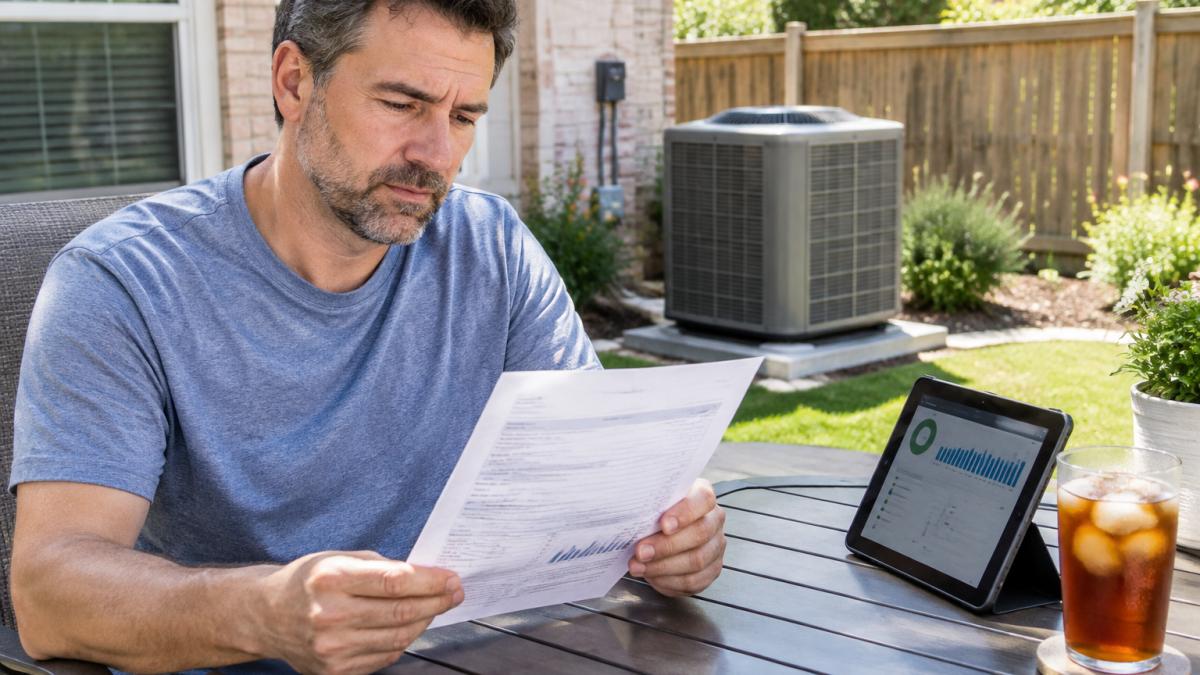
Rather than a generic percentage, here is a formula you can use to build a home-specific estimate.
Annual cooling cost = (cooling capacity in Btu ÷ SEER2) × annual cooling hours × your electricity rate ÷ 1,000
Work it in four steps:
- Find your system size. A typical home uses a 3-ton unit, which is 36,000 Btu per hour.
- Divide by SEER2. At 36,000 Btu and 14 SEER2, the unit draws about 2.57 kW while running. At 20 SEER2, it draws about 1.8 kW.
- Multiply by runtime. Estimate annual cooling hours for your area, then multiply by your rate per kWh from your latest bill.
- Compare the two results. The difference is your estimated annual savings, and dividing the installed price difference by that number gives your payback period.
The lesson: savings scale with runtime and rate. Improving attic insulation alongside an efficiency upgrade is one of the most reliable ways to protect the savings you just paid for, and our team handles attic insulation for homeowners who want the envelope and the equipment working together.
AC Replacement Payback Period: When the Upgrade Pays for Itself
The AC replacement payback period is the number of years it takes for accumulated energy savings to equal the extra money you spent on a higher-efficiency unit, and for most homes it lands somewhere between five and twelve years depending on climate, rates, and how big the efficiency jump is. Divide the price difference between the standard and high-efficiency option by your estimated annual savings, and you have your answer.
Two factors shorten payback more than anything else. First, the size of the efficiency jump: going from an old 10 SEER system to a 16 SEER2 unit is a much bigger leap than going from a 14 SEER2 builder-grade unit to a 16. Second, your electricity rate and runtime, which is why the same upgrade can pay back twice as fast in one home as in another on the same street.
Payback is not the only number that matters, and a simple energy-savings calculation understates the real case for replacing. A total cost of ownership comparison adds four items the energy math leaves out:
- Avoided repairs and breakdown risk. An aging system facing a major repair, such as a compressor or coil replacement, folds that avoided cost into the decision. Ask about warranty coverage for any unit you consider.
- Maintenance and service costs. New equipment typically needs less corrective service early on, while older units generate more frequent repair calls. Budget a realistic annual maintenance figure for both options.
- Incentives and rebates. Federal tax credits, utility rebates, and state or local programs may be available for certain high-efficiency systems (Home Upgrades). Eligibility depends on program rules, so verify current requirements with the program administrator before you buy.
- Financing cost. If you finance the upgrade, the interest over the loan term belongs in the total cost.
A practical decision framework helps you weigh replacing now against keeping the existing unit:
- Age and condition. If the unit is near or past the typical service life for central air conditioners and has a history of repairs, replacement deserves serious weight.
- Repair cost versus replacement. A single repair approaching a meaningful share of replacement cost is a signal to compare both paths rather than patch again.
- Usage and rate. High annual cooling hours and a high electricity rate shorten payback and strengthen the case for a higher SEER2 unit.
- Expected time in the home. If you plan to stay long enough to pass the payback point, the upgrade is easier to justify; if you expect to move soon, a standard unit may fit better financially.
- Net cost after incentives. Compare the installed price minus confirmed rebates and credits, not the sticker price alone.
Run the energy formula first, then layer in avoided repairs, maintenance, incentives, and financing for a total cost of ownership picture. That combined number, not the monthly bill alone, should drive the decision.
High-Efficiency vs Standard Units: Pros, Cons, and Hidden Factors
High-efficiency units win on operating costs and comfort, while standard units win on purchase price and simplicity, and the right pick depends on how long you plan to stay and how hard your system works. Here is the honest comparison.
| Factor | Standard Unit | High-Efficiency Unit |
|---|---|---|
| Purchase price | Lower | Higher |
| Monthly energy costs | Higher | Lower |
| Comfort features | Single-stage, on/off | Often two-stage or variable-speed |
| Humidity control | Basic | Better, with longer gentler runs |
| Payback period | Not applicable | Roughly five to twelve years |
| Best for | Budget-first, short stay | Long stay, high runtime |
The hidden factors are where most buyers get surprised. If your air handler is aging or mismatched, replacing it may be part of the upgrade, and we handle air handler replacement as part of a full efficiency plan. In some cases the condenser is the weak link, and AC condenser replacement gets the system back to its rated performance.
Watch out: buying the highest SEER2 unit available without addressing ducts, insulation, or sizing is the most common way homeowners waste money on an efficiency upgrade. The equipment cannot outperform the system around it.
If you want to see how our overall AC service offering fits together before deciding, you can review our AC services and compare repair, maintenance, and replacement options in one place.
Schedule a High SEER2 AC Assessment with Dwello Home Services
The smartest next step is not picking a number off a spec sheet. It is having a licensed technician measure your home and review your system before you commit. Dwello Home Services is a family-owned, fully licensed team serving homeowners across the Dallas-Fort Worth area, with a process built around clear communication and fair pricing.
A thorough home assessment can check system sizing, duct condition, insulation, and how you actually use the AC, so you can compare standard and high-efficiency options with real numbers. From a straightforward replacement to a full efficiency upgrade, we are ready to help you choose what fits your home and budget.
If your energy bills keep climbing and you are not sure whether the equipment, the ducts, or the attic is the real culprit, get a straight answer before you spend on a new unit.
Frequently Asked Questions
Is a higher SEER2 rating worth the money?
It depends on your climate, how long you plan to stay in the home, and your current unit’s age. In hot climates with long cooling seasons, a high SEER2 AC unit can lower monthly energy costs enough to offset the higher purchase price over time. Homes with short cooling seasons or plans to move soon may see less benefit. A home-specific load calculation and usage review gives the clearest answer.
How much can a high SEER2 AC unit save on energy bills?
Savings depend on the efficiency gap between your old unit and the new one, your electricity rate, and how many hours you run the system. Actual bill reductions vary with duct condition, thermostat settings, and home insulation.
How does SEER2 differ from SEER?
SEER2 uses updated testing procedures with higher external static pressure, which better reflects real ductwork conditions. The numbers are not directly interchangeable, so confirm the SEER2 figure for any system you compare.
Should I replace my air conditioner if it still works?
Consider replacement when your system is aging, needs frequent repairs, or uses refrigerant that is no longer widely supported. A working unit with a failed compressor or leaking coil often costs enough to repair that replacement makes more financial sense. Get a written comparison of repair cost versus replacement cost before deciding.